Home
Repair And Restoration
Anaerobic Gasket Maker
Blog Date - 27 April 2026
By Ren Withnell
I remember back when I was a young trainee mechanic. I took an ET (Employment Training (Extra Tenner)) placement at this training centre. 10 or 12 lads with varying skills and attitudes, and I seemed to be the only one without some kind of supervision order.
We learnt on the job. The centre would get "customers" by giving punters services and repairs for the cost of the parts and maybe a few beers or a fiver for the lads - all on the premise that you're not coming back with warranty claims or grumbling about questionable work. The instructor was a lovely chap and an experienced mechanic who would guide us through the jobs, or at least be there if we had questions.
Most of the cars were end of life clapped out bangers - if you had a nice car you're weren't going to let a bunch of reprobates with very little skin in the game go to town on your pride and joy. It was all rust and seized bolts, oil leaks and clapped out motors, crusty wiring and worn brakes.
One thing I do recall was so many of these old engines would be lathered in various sealants. Most gaskets were long gone - replaced with bright orange or deep blue globules of rubbery stringy goop. I also learnt that these sealants - lavishly applied - would not only be squeezed out of joints into the air outside but also into the insides of the engine itself. This gloopy excess would then end up in the oil.
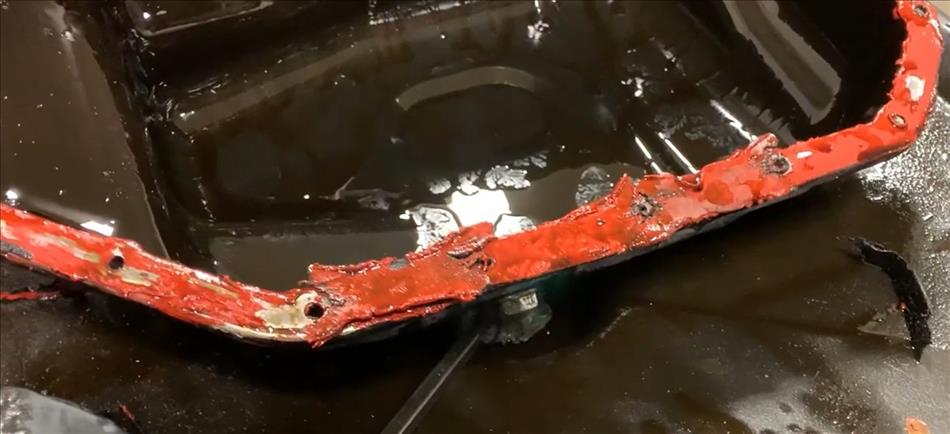
How to get instant gasket into your engine oil - and your sump gauze.
It wasn't uncommon to remove a sump to find the sump filter partially or totally blocked with excess gloop. It wasn't unheard of to find oil not reaching the head because squished out instant gasket had clogged a narrow oilway. We even saw overhead valves jammed open due to bits of instant gasket stuck in the valve guides.
As such I learnt to NOT EVER use instant gasket. Either get (or make) the right gasket or don't bother. Handy tip - when applying a typical paper type gasket - cover it in grease - it helps removal next time you open the join again.
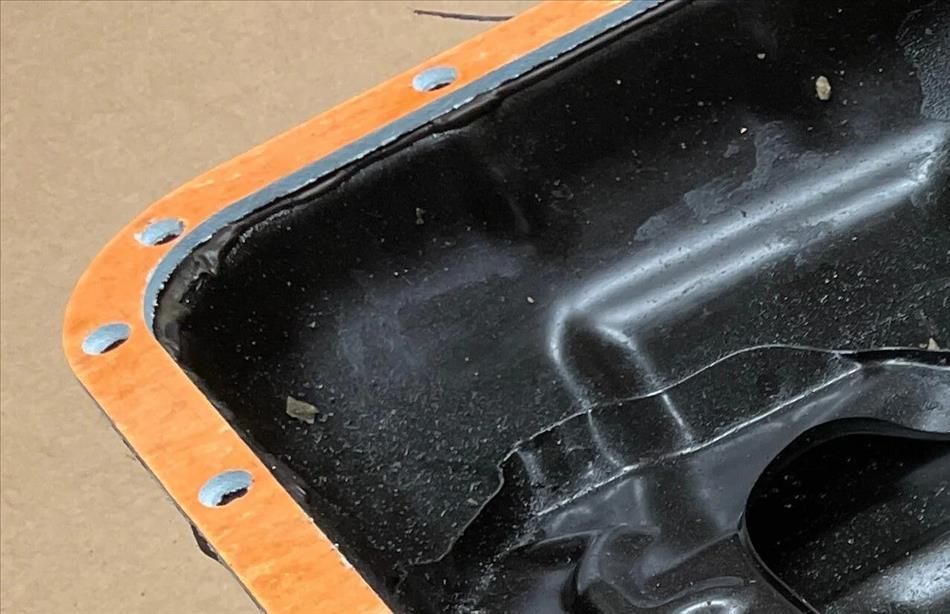
Get a PROPER GASKET!!!
So imagine my horror when YouTube became a thing and I'd see new engines being made with gloopy sealants rather than paper gaskets. Imagine my terror when I'd see respected mechanics also using sealants. I have finally come to realise that instant gasket/RTV/silicon sealant or whatever you choose to call it - doesn't have to preclude the demise of your motor... if used correctly.
However - and to the point - I was watching one video recently about replacing the clutch on a CB500X. The YouTuber mentioned "Anaerobic Gasket Maker". I thought "what the hell is anaerobic gasket maker?"
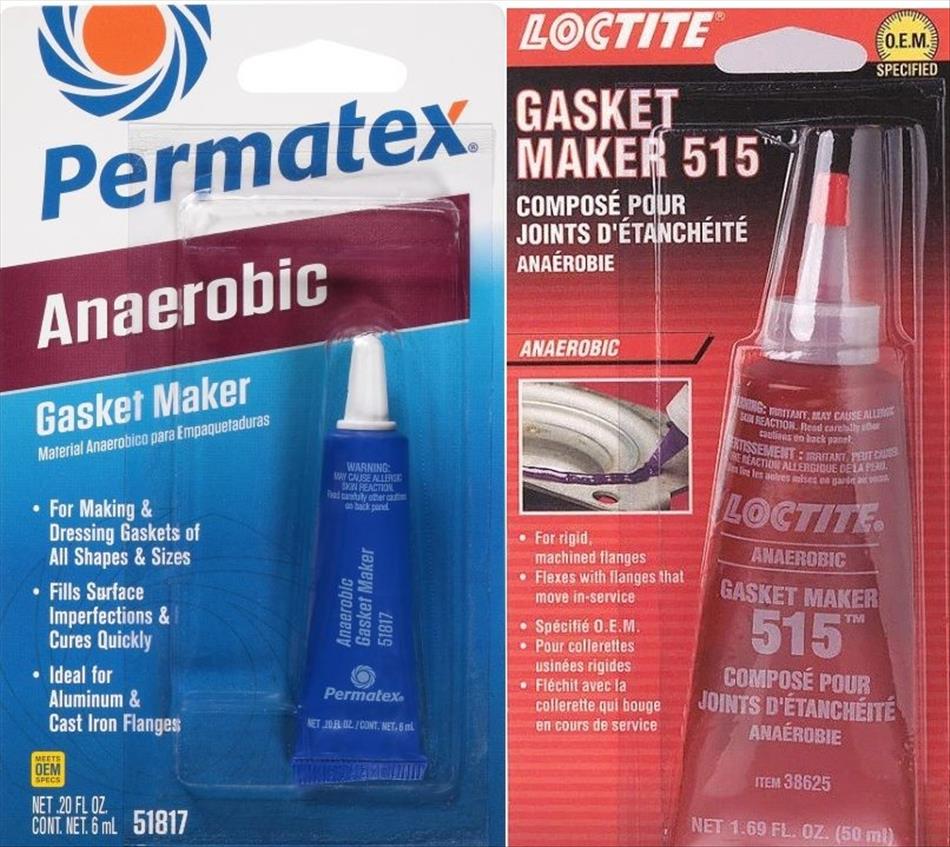
This is Anaerobic Gasket Maker... apparently.
Google tells me it's a sealant that ONLY becomes gasket-like where it is squished between metal surfaces and it won't set or become gloopy rubbery nasty stuff in the air - nor presumably the inside of the motor. For reasons of "chemistry" the anaerobic stuff can only become "gaskety" when trapped tightly betwixt closely fitting machined metal surfaces. It's all about ions and electrons, muons and quarks, quantum tunnelling and Schrodinger's wave functions, oh and the flap of a butterfly's wing in the Amazon causing tornadoes in Bolton.
All this goes to prove one thing - I know nothing. What I also don't know is what happens to said substance if it's squished into the oilways but in theory it won't actually block those oilways as it remains liquidy. One website suggested it won't harm the oil if some of it gets in the oil. I dunno about that but the fact the oilway isn't blocked must surely be a good thing.
It appears this magic anaerobic gasket stuff is wonderful! Why aren't we all using it on everything? Note that it only works on closely machined joins. Obviously being a precision made Honda the surfaces of the clutch cover and crank cases will already form a tight join - the anaerobic gasket is there to purely as belt and braces surely? How you'd go on with the mangled faces of a pressed steel sump joining the rusty crusty bottom of your 1970's Pinto engine block is another thing.
It's my understanding rough imprecise surfaces would have gaps too big for the anaerobic gasket - not close enough to the ions and electrons to do it's chemistry magic or something like that. In which case you're back to silicon gloop. That's all fine and good, but for goodness sake just don't put too much on will ya - think of your sump filter!
Advertise here - contact ren@bikesandtravels.com
Reader's Comments
Ian Soady¹ said :-
The original plastic gasket was itself anaerobic in that it only set when it was squeezed and the air excluded. It was also know as RTV - room temperature vulcanising - sealant. I agree it can be awful stuff and I would never use it where there was any risk of it getting into oilways etc. However, I don't have a problem with things like Norton primary chaincases which are notoriously hard to seal. Mind you once you've applied the silicone (note not silicon which is entirely different!) you can't get the thing apart again..... I also found that ordinary bathroom silicone worked perfectly well and indeed can even help fix loose exhausts contrary to popular belief.
Most of the Japanese manufacturers supply their own version of what you describe above eg Yamabond (the generic name is Threebond). My personal preference is Wellseal which I've used for decades. In fact I've just run out and need to order some more. If I remember correctly it's made from crushed beetles dissolved in acetone.
I've just remembered that all (or most) Loctite products are anaerobic eg their thread locking stuff. Stays liquid in its bottle - for years - but as soon as it's squashed in between threads it sets and after a few hours is very strong.
https://www.bikerstoolbox.co.uk/products/wellseal-jointing-compound?_pos=1&_sid=...
28/04/2026 10:26:28 UTC
Upt'North ¹ said :-
I really don't like seeing sealant where it shouldn't be seen. But better that than a leak I spose. Never heard of that term either Ed, it's probably sales speak for b......s. But what do I know. I'll tell you one thing I do know, sniffing Green Hermitite is addictive. Blummin lovely stuff and great at keeping stuff where it should be. Sadly I have none on the shelf and my last bottle was probably 40 years old. Pffffffftttttt.
That picture Ed shows that idiots and vehicles shouldn't mix.
28/04/2026 11:07:51 UTC
Ian Soady¹ said :-
Green hermetite? That's the "permanent" stuff that meant it fell off the bits it was supposed to stick to then you couldn't get rid of it elsewhere.
28/04/2026 12:45:39 UTC
Upt'North ¹ said :-
Maybe, but it smelled blummin lovely.
I seem to remember it did a sound job on coolant and oil but it's a while back.
28/04/2026 16:41:44 UTC
Ian Soady¹ said :-
Like trichlorethylene (trike) and perchlorethylene (perk) which when I was an apprentice we used to clean inside instruments (pressure gauges etc not violins). Later it turned out to be carcinogenic as well as hallucinogenic. I wondered why I liked working in the instrument shop.....
04/05/2026 12:22:06 UTC
Upt'North ¹ said :-
We had a heated trichlorethylene cleaner Ian at the HGV workshop, about the size of a family car. It was very good at what it did and that included sending the bloke completely bonkers who operated it, although he was probably nuts in the first place. If you heard him shouting you'd give him some space. It did smell blummin lovely, a great place to get rid of a headcold.
04/05/2026 13:25:15 UTC
Name
Comment
Add a RELEVANT link (not required)
Home
Repair And Restoration